How to Start a Newspaper Article: Format, Examples, and Writing Style Guide
By Devon Marsh · 2026-08-27T22:46:22.904+00:00 · 16 min read

Table of contents
Many new writers struggle with the same problem: they know their topic, but they freeze on the first few lines. A weak opening can make readers leave the page in seconds, while a stronger one tends to keep them reading, and that same clear structure often happens to work well for search visibility too.
This guide covers the full picture: how to write a strong lead, how to format a complete newspaper article, the journalistic writing style professionals use, and real examples you can study and adapt.
Why the First Paragraph Matters
The first paragraph, called the lead (sometimes spelled lede in newsrooms) is the most important part of any news article. Readers decide within seconds whether to keep reading.
A strong lead helps you:
Grab attention quickly
Explain the story clearly
Build trust with readers
Make the article easy to scan
Keep readers engaged through the rest of the piece
Master this one skill and the rest of your writing improves almost automatically.
Understand the Story Before You Write
Before typing a single word, get the facts straight. Ask:
What happened?
Who is involved?
Why does it matter?
When did it happen?
Where did it happen?
How did it happen?
These six questions, often called the 5 W's and H, cover most of what a news story needs. Reporters generally try to confirm them before drafting the lead, not after.
Newspaper Article Format: The Complete Structure
A finished newspaper article is built from distinct, named parts. Knowing what each one does makes the writing process far less intimidating.
Headline and Byline
The headline summarizes the story in a handful of words. The byline (By Jane Doe) credits the writer. Together they're the first thing a reader or a search engine sees; SEO practices for higher rankings.
Dateline and Lead Paragraph
Many news articles open with a dateline: the city and sometimes the date the story is reported from (e.g., CHICAGO —). It's followed immediately by the lead paragraph, which answers as many of the 5 W's and H as can fit naturally in one or two sentences.
The Nut Graph: Why This Story Matters
Right after the lead, longer articles often include a nut graph, a sentence or two that explains why the reader should care. If the lead is the "what," the nut graph is the "so what." Short news items sometimes skip this and fold it into the lead itself.
Paragraphs and Supporting Quotes
The body expands on the lead with supporting facts, data, and quotes from sources. Attribute each quote to the person who said it, and explain why they're credible to speak on the topic.
Background Information
This section gives context readers might need: history, related events, or definitions of unfamiliar terms. It usually appears in the middle or lower-middle of the article, consistent with inverted pyramid logic.
Ending or Kicker
News articles don't need a dramatic conclusion. Many simply end on the last relevant fact or a forward-looking quote, sometimes called a kicker when it's a memorable closing line.
A headline should summarize the story instantly in one clear and engaging line. It should give readers a quick understanding of what the story is about.
The lead paragraph should answer the core 5 W’s and H: who, what, when, where, why, and how. Ideally, it should be covered in one or two concise sentences.
The nut graph explains why the story matters and gives readers the key context behind the news. It should briefly highlight the importance or impact of the story in one or two sentences.
The body contains the main details of the story, including important facts, data, statements, quotes, and supporting information. It can consist of several paragraphs arranged in a logical order.
The background section provides additional context, history, or previous developments related to the story. Usually, one to three paragraphs are enough to help readers understand the bigger picture.
Finally, the ending or kicker closes the story naturally. It can leave readers with an important takeaway, final detail, quote, or thought-provoking point in one or two sentences.
Use the Inverted Pyramid Style
Professional journalists organize articles using the inverted pyramid: the most important information goes at the very top, with details narrowing in importance as the article continues.
MOST IMPORTANT FACTS
Supporting Details
Background Information
Extra Details
This isn't just a writing convention; it's also why news writing performs well in search. Readers (and Google's crawlers) get the core answer immediately, which improves time-on-page and reduces bounce rates. If a reader stops after the first paragraph, they still get the story.
Write a Strong Lead Paragraph
A good lead paragraph answers most of the 5 W's and H in one or two clear sentences.
Weak example: Something surprising happened yesterday. This is vague and gives the reader no reason to continue.
Better example: A large fire damaged three shops in downtown Chicago on Tuesday night. This sentence delivers who, what, when, and where immediately.
Types of Newspaper Leads
Summary leads are the most common style; states the core facts directly.
City officials opened a new public park on Monday to give families more outdoor space.
The question lead opens with a question to engage the reader. Use sparingly; overuse weakens credibility.
What would happen if your city lost electricity for two days?
Descriptive lead paints a scene before stating facts. Common in feature writing and disaster coverage.
"Heavy rain covered the streets as rescue teams helped trapped families."
Quote lead opens with a compelling, attributed quote.
A local shop owner described losing everything within minutes after the storm hit.
A quick way to think about which one to reach for:
Different types of leads work better for different kinds of stories. A summary lead is best suited for routine news, business updates, and straightforward reporting because it delivers the key information quickly, but it may not work as well for stories with strong emotional or narrative value.
A question lead can be effective in feature and opinion-adjacent pieces, although it may feel uncertain or gimmicky in hard news. A descriptive lead works particularly well for disasters, human-interest stories, and feature writing because it helps create a vivid picture for readers, while breaking news usually requires faster delivery of essential facts.
A quote lead is useful when a source's own words communicate the story more effectively than a reporter's introduction, but it should be avoided when the quote requires too much background or explanation to make sense.
When you're not sure which to use, the summary lead is the safer default; it's also usually what editors expect for everyday assignments.
Different Story Types, Different Leads
It's also worth noting that not every article is trying to do the same job, so the "right" lead can depend on the type of story:
Straight news routine, factual coverage like council meetings or business openings. Usually a summary lead, sticking close to the inverted pyramid.
Breaking news: fast-moving stories where facts are still coming in. Leads here tend to be shorter and get revised as the story develops; a one-line version often goes out first, then gets expanded.
Feature articles, profiles, human-interest pieces, longer explainers. These have more room for a descriptive lead, or even a short narrative opening, and don't always follow the inverted pyramid as strictly; the ending can matter more in a feature than it usually does in straight news.
Figuring out which category a story falls into is generally worth doing before deciding on a lead style.
Full Newspaper Article Example
Here's a complete short article showing every part working together, annotated so you can see the format in action.
Local School Opens New Technology Center By Maria Chen
[Lead] Lincoln High School opened a $2 million technology center on Wednesday, giving 1,200 students access to robotics labs, 3D printers, and a dedicated coding classroom for the first time.
[Nut graph] The center is part of a district-wide push to prepare students for careers in engineering and software development, as local employers report a growing shortage of technical talent.
[Body/quote] Principal David Reyes said the center had been a five-year goal for the school. According to Reyes, more than 300 students have already signed up for robotics electives next semester.
[Background] The project was funded through a combination of state grants and a local bond measure approved by voters two years ago. Similar centers have opened in three other districts in the past year.
[Ending] Reyes said the school plans to open the center to community workshops on weekends starting next month.
Notice how each paragraph could be cut from the bottom up without destroying the story; that's the inverted pyramid at work.
Journalistic Writing Style: Core Rules
Journalistic writing style (also called news writing style) is built around a few non-negotiable habits that separate professional reporting from casual blogging.
Objectivity and Neutral Tone
News articles report facts; they don't editorialize. Opinions belong in clearly labeled opinion or editorial pieces, never in a straight news story.
Attribution: Always Say Where Information Came From
Every claim that isn't common knowledge needs a source: according to police, the report stated, Reyes said. Attribution is one of the things that separates journalism from rumor, and it's a useful trust signal in writing generally, not just in news.
AP Style Basics for News Writing
Most U.S. newsrooms follow the Associated Press (AP) Stylebook for consistency: spelling out numbers one through nine, abbreviating most months when paired with a date, and using a consistent approach to titles and capitalization. You don't need to memorize the whole stylebook to start writing well, but consistency matters more than which specific rules you pick.
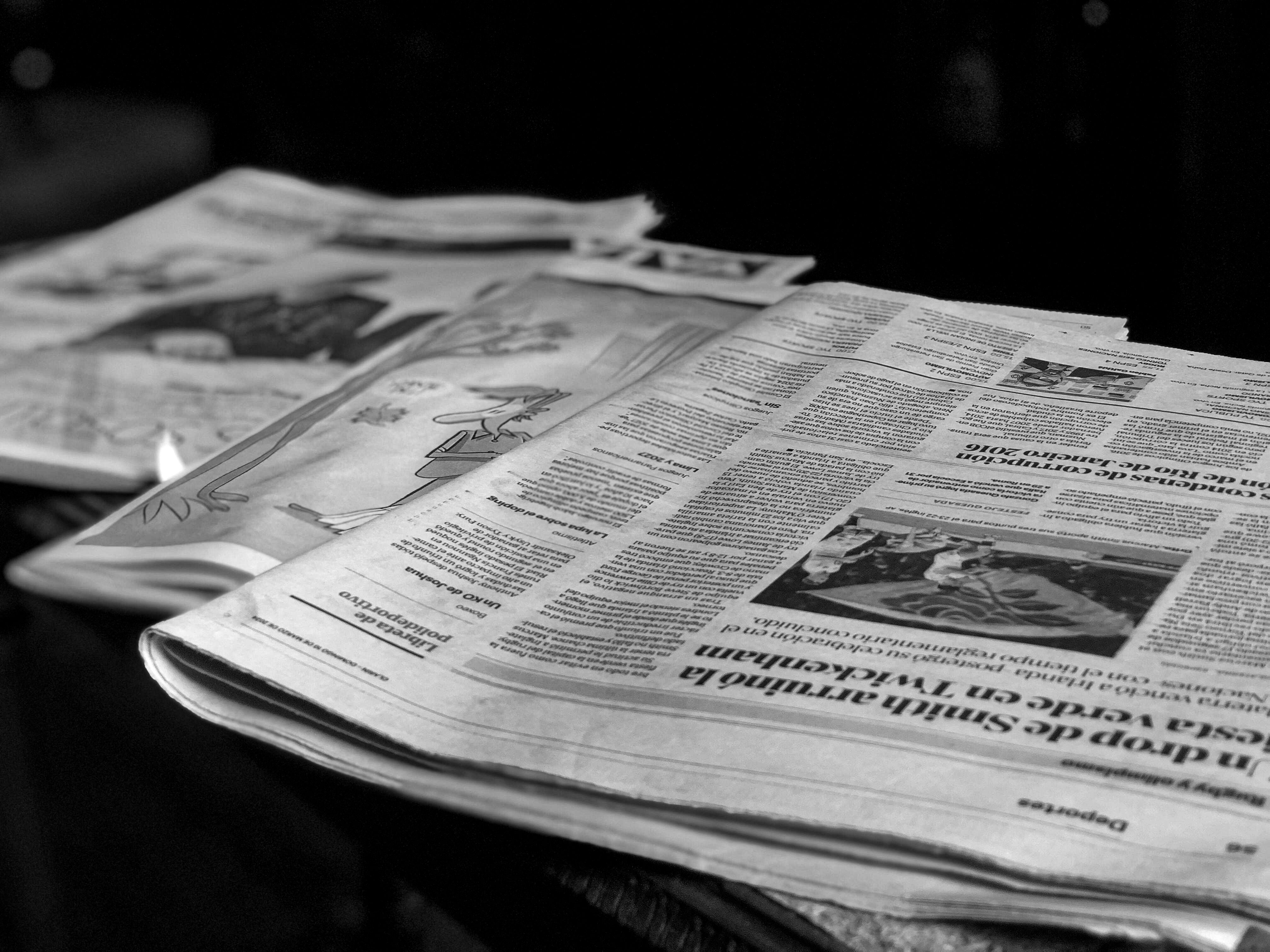
News Writing Techniques Every Reporter Should Know
Beyond the lead, a few techniques consistently separate strong news writing from weak news writing:
Lead with the most newsworthy fact, not the most recent chronological event.
One idea per sentence. Long, clause-heavy sentences slow readers down.
Attribute before you assert. "Officials say the bridge is unsafe" reads more credibly than an unsupported claim.
Use active voice. "Firefighters rescued three residents" is stronger than "Three residents were rescued."
Vary quote placement. A quote in paragraph two breaks up dense fact-reporting and adds a human voice.
Read the article backward, paragraph by paragraph, to check whether the inverted pyramid actually holds if cutting the last paragraph loses nothing essential, your structure is working.
Use Simple and Clear Words
Good newspaper writing avoids difficult vocabulary. Readers want fast, clear information, not impressive-sounding sentences.
Tips for clear writing:
Use short sentences
Avoid uncommon vocabulary
Remove unnecessary words
Focus on verifiable facts
Keep paragraphs short often just one to three sentences in digital news writing
Avoid Common Writing Mistakes
Starting too slowly. Don't open with long background information before the actual news.
Burying the lead. Putting the most important fact in paragraph three instead of paragraph one is one of the most common beginner mistakes in journalism.
Adding too many details upfront. Save secondary details for later paragraphs.
Writing long, clause-heavy sentences. These confuse readers and hurt readability scores.
Adding personal opinions. News articles report; they don't argue.
Skipping attribution. Unsourced claims undermine reader trust immediately.
Real-World Examples From Published News Articles
Studying how major outlets structure their leads is one of the fastest ways to internalize the format. Wire services like the Associated Press and Reuters are useful models because their house style strips out almost everything except the core facts and a fast, clear lead, exactly the structure this guide recommends. Local newspapers are also worth studying because they tend to follow the same inverted-pyramid format on a smaller, easier-to-analyze scale.
A practical exercise: pick any front-page story from a paper you trust, cover everything after the first paragraph, and ask whether that one paragraph alone answers who, what, when, and where. If it does, you've found a well-built lead worth learning from.
Use a Simple News Article Template
A basic template keeps beginners organized:
Headline: short, clear, accurate
Byline your name
Lead paragraph: the core facts
Nut graph: why it matters (optional for short pieces)
Body: facts, quotes, supporting detail
Background context
Ending a natural stopping point, not a forced conclusion
How Long Should a Newspaper Article Be?
Length depends a lot on what kind of story you're writing, but a few rough benchmarks are worth keeping in mind:
The length of each part of an article can vary depending on the type and purpose of the content. A headline is typically around 6–12 words and should clearly communicate the main topic. The lead paragraph usually contains 25–35 words in about one or two sentences, giving readers the most important information quickly.
A nut graph is generally 20–40 words and explains why the story matters. A short news item is usually 150–300 words, while a standard news article commonly ranges from 400–700 words. For a feature article, the content is generally 800 words or more, allowing greater space for details, context, storytelling, and analysis.
These aren't hard rules; wire services will often run a breaking story at under 200 words and add to it as more details come in. The lead is usually the part worth paying closest attention to: if it's taking more than two sentences to cover the core 5 W's and H, that's often a sign it needs trimming rather than more room.
Write Headlines That Grab Attention.
Weak headline: Big Event Happened. This tells the reader nothing.
Better headline: Local School Opens New Technology Center. This explains the story clearly and matches what the article actually delivers, which also helps avoid the mismatch between headline and content that hurts both reader trust and search performance.
A couple of things worth keeping in mind for headlines and leads that also need to work in search results:
Try to put the key noun or topic near the start of the headline rather than at the end.
Vague headlines don't just read as weak journalism; they also give search engines less to match against what someone actually typed.
Keeping the core fact near the start of the lead tends to help both human skimmers and the systems that generate search snippets.
That said, clarity should come first. A headline that's obviously written for keywords rather than readers tends to lose trust, even if it technically performs okay.
Edit Your Lead and Introduction Carefully
A strong lead doesn't usually come out right on the first attempt, and most writers treat editing as a separate pass rather than something to squeeze in while drafting.
Once you've got a draft down, it's worth going back through it for a few things:
Trim weak words. Words like very, really, or "something" take up space without adding much.
Check grammar and punctuation. A typo in the first paragraph can undercut the rest of the article before a reader gets there.
See if the lead and nut graph actually connect. Read them back to back: does the second sentence follow naturally from the first, or does it feel like a jump?
Question whether every fact belongs there. If something doesn't need to be in the first paragraph, it can usually move down or get cut.
Read it out loud. Awkward phrasing tends to be easier to catch by ear than on the page.
This step is easy to skip when you're in a hurry, but it's often where a decent lead turns into a good one. It's not unusual to go through a lead a few times before it's ready.
Practice and Improve
Rewrite headlines from articles you read
Practice writing leads for stories you encounter day to day
Read a few news articles daily and note their structure
Study how professional journalists handle attribution and quotes
Write short practice articles about local events you can verify yourself
Reading real, published examples regularly rather than only studying invented practice sentences is what makes the format start to feel natural.
Why Article Format Matters for Online Readers
Most readers today find news through search and social feeds rather than print. That changes a few practical things:
Short paragraphs matter even more on mobile screens
A clear, accurate headline affects whether the article gets clicked at all
The inverted pyramid format that helps print readers also helps search engines extract a quick, accurate answer
Scannable formatting subheadings, short paragraphs, occasional lists keeps mobile readers from bouncing
Writers who understand both the journalistic tradition and how people read online tend to produce articles that perform well in both contexts.
Conclusion
Learning how to start and structure a newspaper article takes practice, but the underlying formula hasn't changed in decades: lead with the most important facts, organize by importance using the inverted pyramid, attribute your sources, and keep the language clear. At Expertsbytech, we believe mastering this format once means it works for breaking news, local reporting, or any article where readers need the truth quickly.



Comments 0
No comments yet. Start the conversation.